Sunday, 20 October 2013

Continuity editing

Editing and Representation

Action match

This is when following a certain character (e.g Harry Potter casting a spell) which is a purely technical device. When a action match is used for inter cutting, it can heighten the contrasts between two different characters in two different situations.


Eyeline match

This is usually used to provide insight into a characters thoughts. For example the picture below suggests what Jamal from Slumdog Millionaire is thinking what the answer to the question is.


Final shot

This is where in any scene in which characters or a character is shown in the final shot of the sequence. This is normally the character who the audience have to identify. The image below is a final shot used in Eastenders which are usually cliffhangers.


Intercutting

This is used to draw two storylines together, this can be structured to create tension,
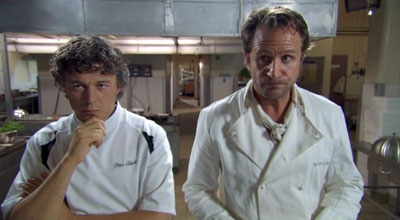
and therefore heighten the audience’s identification with a particular character.  In Hotel Babylon, intercutting
offers both tension and juxtaposition: just as Adam is saving his colleague’s life with a jar of jam, another African immigrant, Ibrahim, is being lost. The tension and juxtaposition lead the audience to identify with both
characters.


Jump cuts

These are rarely used in TV or film; when they are, they tend to suggest either chaos and disorder,
self-conscious ellipsis (drawing attention to the rapid pace of the action) or by a director who likes
to break the rules.


Continuity editing

A highly standardized system of editing, now virtually universal in commercial film and television but originally associated with Hollywood cinema. A key element of the continuity system is the 180 DEGREE RULE, which states that the camera must stay on only one side of the actions and objects in a scene. An invisible line, known as the 180 DEGREE LINE or AXIS OF ACTION, runs through the space of the scene.

In an instance of two people facing each over you would have a load of shots throughout the passage. Foe example: establishing shot, re-establishing shot, long shot, medium shot and two shot (shot with two people). These shots usually alternate between the two speakers, with the camera placed at more or less opposite ends of the axis of action between them.This pattern of alternating shots is called the SHOT/REVERSE SHOT.

Cross cutting and Parallel editing

Cross cutting is a pattern of editing that alternates shots of two or more lines of action occurring simultaneously in different places. For example there could be a shot of someone in pain after being stabbed, then a shot of an ambulance driving.

Parallel editing involves the same pattern of alternation, but does not necessarily imply temporal simultaneity (two events happening at the same time). An example would be contrasting two scenes of happiness and sadness.


Monday, 14 October 2013

Prelim video

http://www.youtube.com/watch?v=LRtIBLnrRWI Here is the link to our prelim task. The process of filming was done at the cherwell school with a iphone. The editing software we used was videopad. 

Monday, 7 October 2013

Codes and Conventions Menu

Genre- Horror   

Starters 

Location- A house in a small village nothing unusual about it.

Casting- Actors who have an experience in horrors, teens and adults in late 20s-30s required and preferably English actors.

Make up- For all the actors and stops lighting from shining off actors faces. Used heavily for the teens who turn into zombies.

Mains

Lighting- Natural lighting in the day, but then at night under lighting for the zombies to create horror effects and key lighting to highlight the main character.

Hair styling- Chavy hairstyles for the teens and then usual hair styles for the rest of the cast.

Costumes- Chav clothes for the teens like tracksuits, and then posh clothes for the adults as its in a posh area.

Desserts

Background- The background of the film is a forest behind the village. This creates suspicion for the audience as there curious why there's a forest. 

3D- This is because our film will be in 3D.

Set- Our set needs to be made purposefully to suit the needs of 3D. The set will also be natural and not a man made set.

Wednesday, 2 October 2013

Filming Preliminary Task

Our task involves us filming and editing a character opening a door, crossing a room and sitting down in a chair opposite another character, with whom she/he then exchanges a couple of lines of dialogue. The task also has to demonstrate match on action, shot/reverse shot and the 180-degree rule.

 Front of storyboard
 Back of storyboard


Our story is about a man coming back to his house and wife after cheating on his wife. His wife is not pleased and acts angrily. The genre of our film is romantic, mood is tense and the title is Cheat.

                                                  The camera we will use to film is a iphone. This camera is good as it was easy to upload to a computer. The editing software to be used is called videopad.


Our Shooting schedule

Wednesday, 25 September 2013

Camera Movements


Pan- A pan is a movement that scans the scene horizontally. The camera is placed on a tripod, which operates as a stationary axis point as the camera is turned.


Tilt- A tilt is a movement which scans a scene vertically, otherwise it is very similar to the camera movement of pan.


Dolly Shots- This involves the camera being placed on a moving vehicle and moves alongside the action, generally following a moving figure or object. A dolly shot may be a good way of portraying movement, the journey of a character for instance, or for moving from a long shot to a close-up.


Crane Shots- These are basically Dolly shots in the air. A crane can be used as a useful way of moving a camera - it can move up, down, left, right, swooping in on action or moving diagonally out of it.


Steadicam- Steadicam ia brand of camera stabilizing mount for motion picture cameras that mechanically isolates it from the operator's movement. It allows for a smooth shot, even when moving quickly over an uneven surface.


Handheld- Handheld camera movements can provide specific tones and emotions to a viewer. In found footage films such as Cloverfield, the shaky camera effect is used to represent a home video effect.


Zoom- This involves changing the focal length of the lens to make the subject appear closer or further away in the frame. 


Reverse zoom- A single shot which moves away from a particular subject. When done very quickly it can displace the audience, but it can also be used to show the wider picture or context of an image.


Monday, 23 September 2013

Friday, 20 September 2013

Semiotic Analysis

Semiotics are often used in adverts to portray signs that the consumer will understand or get, from looking at the advert. For example a thumbs up or smile would be used as semiotics in adverts.

The advert I will be finding semiotics in is the hair removal company Veet. The first or main semiotic you get drawn to as the consumer is the picture of the smiling beautiful woman. The smiling woman could represent the happiness and beautifulness you will feel after using the product. Also as a sign of someone smiling you automatically have the feeling that this person is happy and joyous about something, and that something must be to do with the product. The second semiotic in the advert I noticed was the images of the flying trousers. This semiotic is represented as a sign of the new lease of life you can feel after using the product. Also the flying trousers may also represent the hair which will fly off due to the Veet hair removal cream, and the sign of confidence you will gain after using the product because you won’t need to wear jeans anymore to cover up the hair on your legs. The third semiotic is the pink colouring at the right hand side of the advert. The reason for this is that the colour pink is signified as a feminine colour, and the use of the pink background is a sign that the product is for females and isn’t a male product. Also pink is symbolic of gentle emotions and considered a colour of good health and life, this links to the fact that this product offers you a good or better life. The final semiotic I will be looking at is the slogan “what beauty feels like”. This sign suggests the benefit women will get after using Veet, which is feeling and also becoming beautiful. Women get attached to the advert as they want to “feel beautiful” and want to know what it feels like to be beautiful. This then encourages women to go out and purchase Veet as they wanted to feel and become beautiful.